Choosing the right sensory toys for autism can feel overwhelming when every child's needs are different. Some kids seek deep pressure, others need tactile stimulation, and many benefit from a combination of sensory inputs throughout the day.
This guide is designed to help parents, teachers, and therapists understand how sensory toys support children with autism and special needs — and how to choose the ones that will actually make a difference.
Understanding Sensory Needs in Autism
Many children on the autism spectrum experience the world differently through their senses. Some are hypersensitive (over-responsive) to certain inputs like loud sounds or rough textures, while others are hyposensitive (under-responsive) and actively seek out intense sensory experiences.
This is why a child might cover their ears at a dog barking but love squeezing stress balls with all their strength — different sensory channels, different thresholds. Sensory toys are tools that help regulate these responses by providing controlled, predictable input that the child can manage at their own pace.
How Sensory Toys Help Children with Autism
The right sensory toy does more than entertain. It serves as a regulation tool that helps children:
-
Self-soothe during meltdowns — Deep pressure toys and squeezable objects activate the parasympathetic nervous system, helping shift from fight-or-flight to calm
-
Transition between activities — A familiar fidget can ease the anxiety of changing tasks or environments
-
Improve focus and attention — Controlled sensory input frees up cognitive resources for learning
-
Develop fine motor skills — Squeezing, rolling, and manipulating small objects strengthens hand muscles and coordination
-
Communicate needs nonverbally — Reaching for a specific toy can signal what type of input a child needs
Best Types of Sensory Toys for Autism
Tactile and Textured Toys
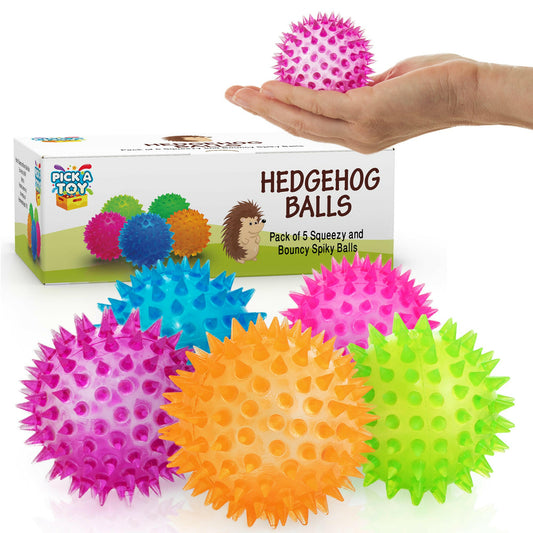
Texture is one of the most powerful sensory channels. Spiky sensory balls provide intense tactile feedback that many children with autism find deeply calming. The raised spikes stimulate nerve endings across the entire palm, delivering proprioceptive input that helps ground the child in their body.
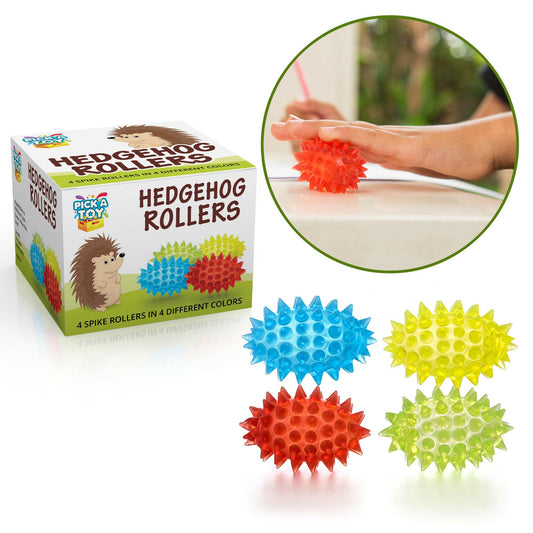
Spiky roller fidgets offer a different kind of tactile experience — rolling them across arms, legs, or palms provides a predictable, rhythmic sensation that many kids use for self-regulation throughout the day.
Wearable Sensory Tools
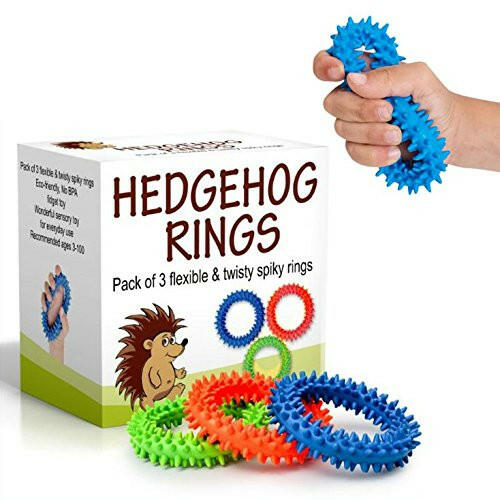
For children who need constant access to sensory input, wearable options are ideal. Sensory fidget rings with soft rubber spikes can be worn on any finger and provide on-demand tactile stimulation. They're discreet enough for school and durable enough for daily use.
Squishy fidget bracelets combine colorful visual appeal with squeezable texture, making them popular with younger children who respond well to bright, engaging sensory tools.
Resistance and Deep Pressure Toys
Many children with autism are sensory seekers who crave deep pressure. Stretchy resistance fidget bands for chairs allow kids to push and pull with their feet during seated activities, providing the heavy work input their bodies need without leaving the chair.
Quiet Fidget Tools
Metal acupressure fidget bracelets provide subtle, silent sensory input through textured surfaces. They're excellent for environments where noise needs to be minimal — therapy waiting rooms, classrooms, and quiet spaces at home.
How to Choose the Right Sensory Toy
Every child is different, so start by observing what your child naturally seeks out:
-
Do they squeeze, crush, or press things? → Try stress balls and resistance bands
-
Do they rub textures or touch everything? → Try spiky rollers and textured rings
-
Do they spin, roll, or rock? → Try roller fidgets and wearable spinners
-
Do they hum, make sounds, or seek noise? → Try simple musical instruments and sound-based play
-
Do they chew on things? → Look for oral sensory chew tools (separate from fidgets)
Work with your child's occupational therapist to identify their sensory profile — whether they're primarily a seeker, avoider, or a combination — and build a toolkit that matches their specific needs.
Tips for Parents and Caregivers
-
Create a sensory toolkit — Keep 4-5 different sensory toys in a zip pouch that travels with your child everywhere
-
Rotate regularly — Sensory habituation is real. Swap toys every few days to maintain effectiveness
-
Offer choices, don't force — Let the child select from 2-3 options. Autonomy is key for regulation
-
Use proactively, not reactively — Offer sensory tools before a known trigger (transitions, crowded places) rather than waiting for a meltdown
-
Prioritize safety — All toys should be BPA-free, non-toxic, and appropriately sized for the child's age
Sensory Toys in Therapy and School Settings
Occupational therapists, special education teachers, and speech-language pathologists increasingly use sensory toys as part of structured therapy. Fidget tools during table-top work, tactile toys during social skills groups, and calming objects during sensory breaks are all evidence-based strategies.
When introducing sensory toys in a classroom, consistency is important. Designate specific toys for specific activities, and teach the child when and how to use them independently.
Frequently Asked Questions
What are the best sensory toys for a child with autism?
The best options depend on the child's sensory profile. Spiky stress balls, textured fidget rings, and resistance bands are popular starting points. Consult with an occupational therapist to identify which types of sensory input your child responds to best.
Are sensory toys just for children with autism?
No. Sensory toys benefit anyone who processes sensory information differently, including children with ADHD, anxiety, sensory processing disorder, and developmental delays. Many neurotypical children and adults also enjoy them for stress relief.
How many sensory toys should I buy?
Start with 3-5 different types to create a basic sensory toolkit. Include a mix of textures, resistance levels, and sizes so your child has options for different situations and moods. Rotate them regularly to prevent habituation.
Can sensory toys replace occupational therapy?
No. Sensory toys are tools that support therapy, not a replacement for it. An occupational therapist can create a structured sensory diet tailored to your child's specific needs and teach you how to use sensory tools most effectively.
Are fidget toys safe for nonverbal children?
Yes, as long as they're age-appropriate and made from non-toxic, BPA-free materials. Avoid small parts that could be a choking risk, and supervise play to ensure the child is using the toy safely. Choose larger items for younger or oral-seeking children.